
Digital Decade
Introduction
The Digital Decade policy programme (also known as the “Digital Decade”), which entered into force on January 9, 2023, is a monitoring and cooperation mechanism. It is set up to achieve common targets for Europe's digital transformation by 2030.
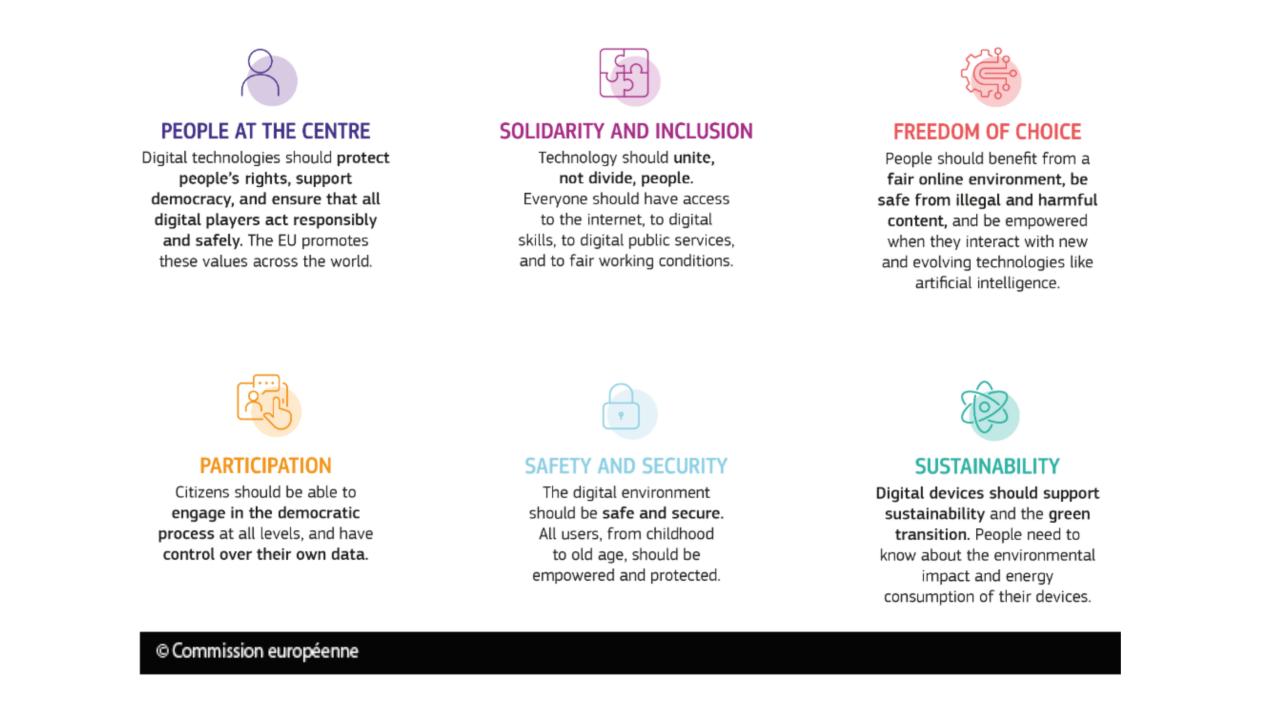
The European Parliament, the Member States and the Commission have thus jointly set concrete objectives and targets in the four key areas of digital skills, digital infrastructure including connectivity, the digital transition of businesses and online public services, in accordance with the European Declaration on Digital Rights and Principles.
The Department of Media, Connectivity and Digital Policy (SMC) represents Luxembourg at the European level and coordinates the initiative through an interministerial committee for digital policy at national level.
Targets and objectives of the digital decade
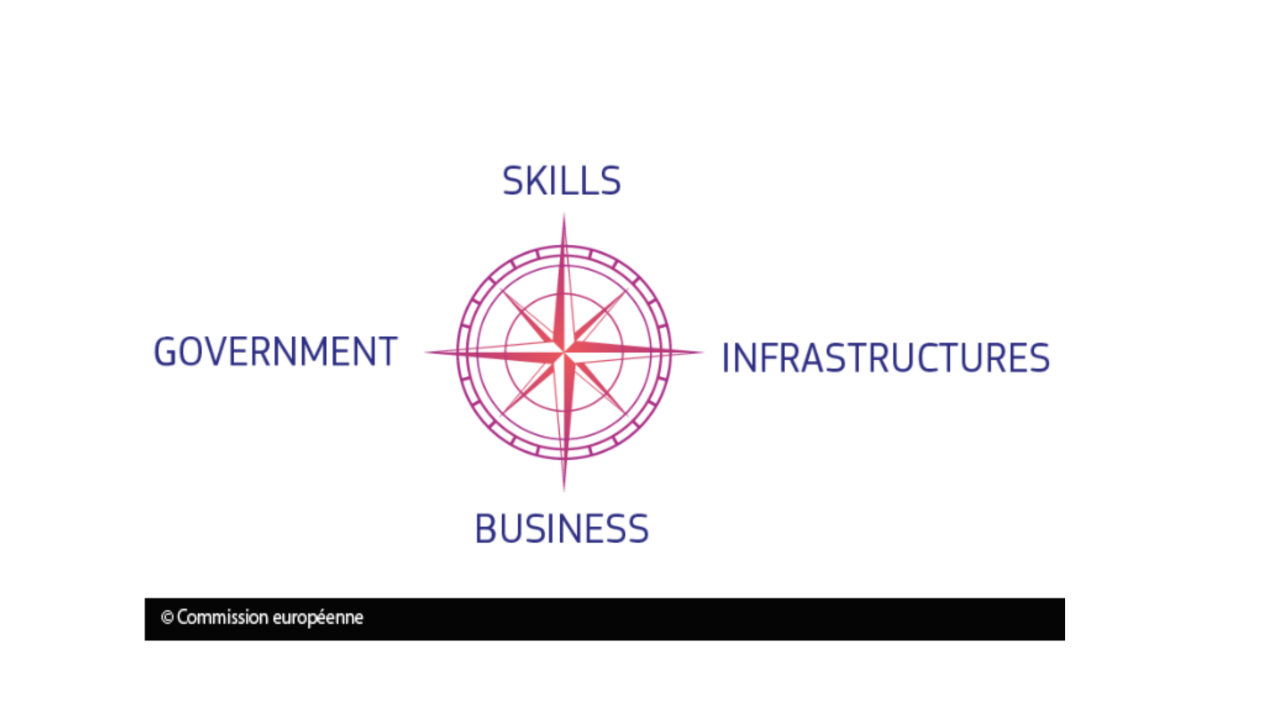
From its entry into force until 2030, the Member States of the European Union, in collaboration with the European Parliament, the Council of the EU and the European Commission, define their digital policies so as to achieve the following targets:
- improve citizens’ basic and advanced digital skills;
- increase the use by EU businesses, including small businesses, of new technologies such as artificial intelligence, data and cloud computing;
- advancing EU infrastructure for connectivity, computing and data; and
- make public services and administrations accessible online.
Together, the objectives and targets of the Digital Decade will guide the actions of the Member States toward a competitive, sovereign, and resilient European Union, protecting and empowering citizens through a digital transformation that supports the ecological transition.
Monitoring progress made in achieving the targets set for 2030
In order to monitor progress in achieving the various targets, the Commission, in collaboration with Member States, has developed key performance indicators (KPIs). More information on the definition of the key performance indicators can be accessed here.
For their part, Member States establish and periodically update their national strategic roadmaps describing the policies, measures, and actions that they plan to implement at national level to achieve the objectives and targets of the program through 2030.
The national strategic roadmap of Luxembourg 2024 can be consulted here (Pdf, 1.23 Mb) (Pdf), as well as the document “Digital Decade Addendum for adjustments to the national strategic roadmap for Luxembourg (Pdf, 360 Kb) (Pdf)”. An updated version of the National Strategic Roadmap will be published by the end of 2026 to reflect recent developments.
Since 2023, the Commission has published an annual Digital Decade Progress Report to review progress, assess achievements towards targets and goals, and provide recommendations.
The 2026 Report on the state of the Digital Decade can be consulted on the Commission's Website. The next report will be published in June 2027.
The European Commission’s Digital Decade Dashboard provides a more detailed analysis of the Member State’s progress in achieving the Union’s digital transformation until 2030. The Digital Decade cooperation mechanism replaces the process of the Digital Economy and Society Index (DESI).
Multinational projects/EDICs
European Digital Infrastructure Consortia (EDICs) are legal entities established under the Digital Decade Policy Programme 2030 to enable European Union Member States to strengthen Europe's strategic digital capabilities, pool investments, and develop, through multi-country projects, interoperable digital infrastructures and services across the Union.
Luxembourg is a member of several strategic EDICs, including:
- Networked Local Digital Twins towards the CitiVERSE (LDT CitiVERSE EDIC): digital twins for cities and territories ;
- Alliance for Language Technologies (ALT-EDIC): language technologies and multilingual artificial intelligence ;
- European Blockchain Partnership and European Blockchain Service Infrastructure (EUROPEUM-EDIC): European blockchain services infrastructure ;
- European Digital Infrastructure Consortium for Innovative Massive Public Administration interConnected Transformation Services (IMPACTS-EDIC): interoperability and digital transformation of public administrations ;
- DigitaL Commons (DC-EDIC): digital commons, open-source software, and European digital sovereignty
More information can be found in the fourth report on the state of multinational projects, published in June 2026.
Useful links and documentation:
- Website of the Commission: Europe’s Digital Decade
- Official Documentation (2026) : State of the Digital Decade package
- European Digital Rights and Principles: Declaration of the European Digital Rights and Principles
For any questions, please contact: digitaldecade@smc.etat.lu.